

Upcoming Yoga Classes in Downtown York, Pennsylvania
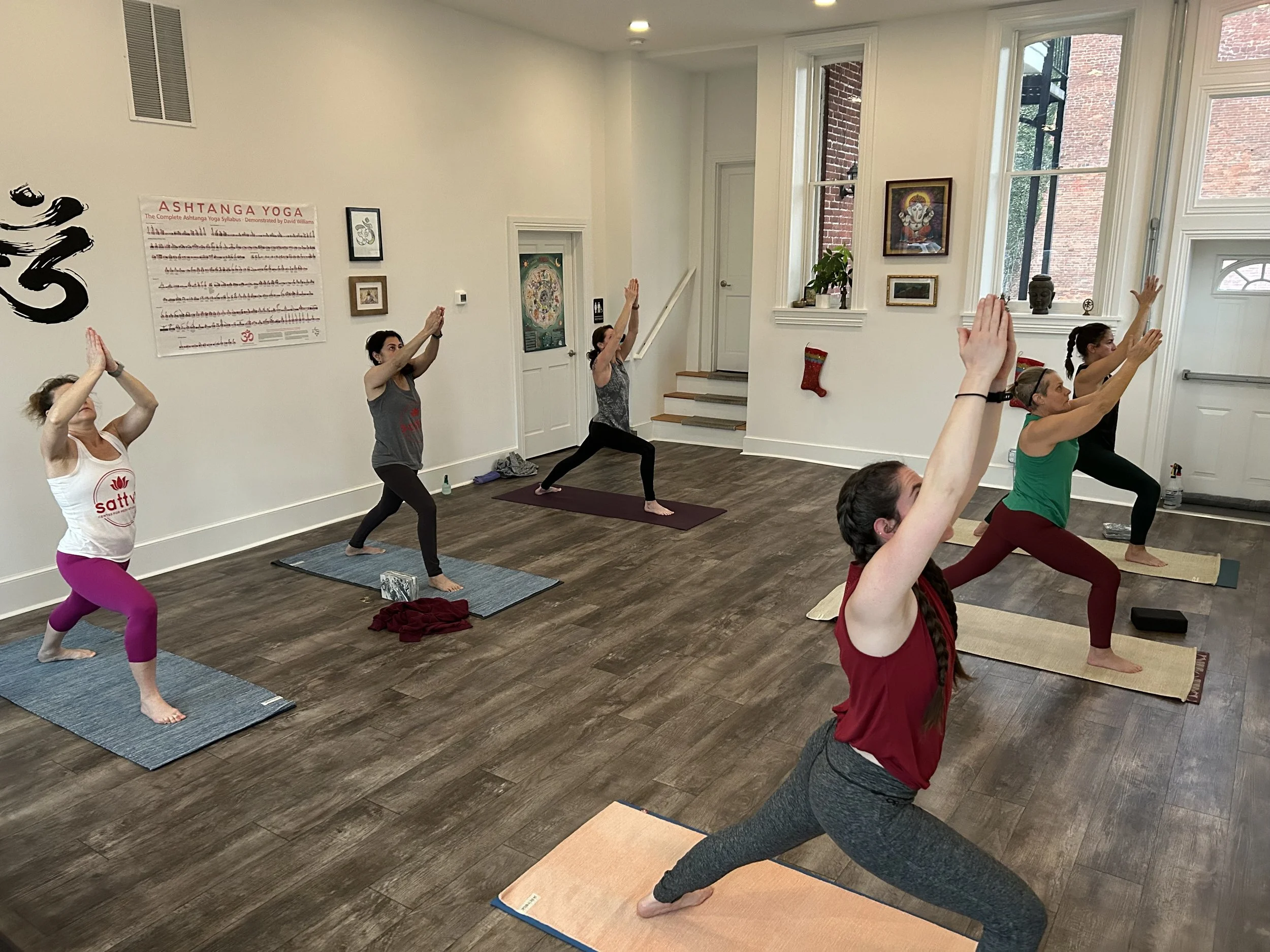
Mysore (Members Only)
The traditional method of teaching Ashtanga yoga: 1-on-1 within a group setting. No prior yoga experience is necessary, only a commitment to grow and learn in the practice.
Students work independently on the particular series of postures that is most appropriate for them. The teacher assists, adjusts and may quietly discuss particular difficulties or concerns with individual students during class.
Mysore (Members Only)
The traditional method of teaching Ashtanga yoga: 1-on-1 within a group setting. No prior yoga experience is necessary, only a commitment to grow and learn in the practice.
Students work independently on the particular series of postures that is most appropriate for them. The teacher assists, adjusts and may quietly discuss particular difficulties or concerns with individual students during class.
Mysore for Beginners
Ashtanga Yoga is traditionally taught in a Mysore setting, named after a city in India (Mysuru) where it was taught by K. Pattabhi Jois. As a new student, you will be taught how to breathe and how to move, and you will learn a small portion of the postures you see other students in the room practicing.
Ashtanga Yoga is a practice that is approachable and healing for all bodies, all levels, and all sizes. Whether you are new to yoga, new to Ashtanga Yoga, or just want to try something new, you are welcome.
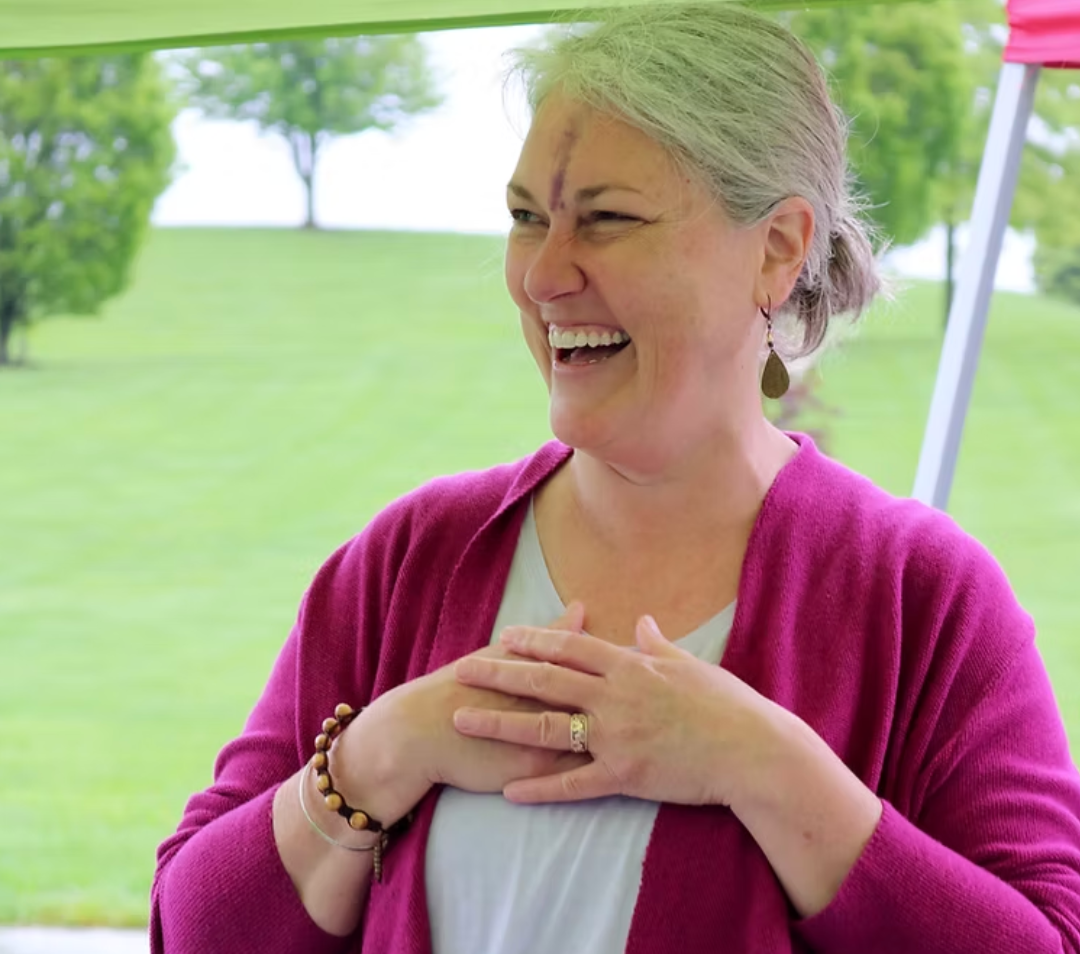
Qigong 4 Well-Being (Members Only)
Qigong for Well-Being is a continued Qigong practice and learning for anyone who has completed an "Intro to Qigong" Course at Sattva. In these classes, we continue to practice the basics learned in the Intro class, and add in other movements, styles, meditations and healing sounds, all for the intention of enhancing our everyday lives, health and well-being.
You must purchase a monthly membership to attend these Qigong for Well-Being classes. If we need to cancel a class due to unforeseen circumstances, we will do our best to make up the class at another date/time.
Mysore (Members Only)
The traditional method of teaching Ashtanga yoga: 1-on-1 within a group setting. No prior yoga experience is necessary, only a commitment to grow and learn in the practice.
Students work independently on the particular series of postures that is most appropriate for them. The teacher assists, adjusts and may quietly discuss particular difficulties or concerns with individual students during class.
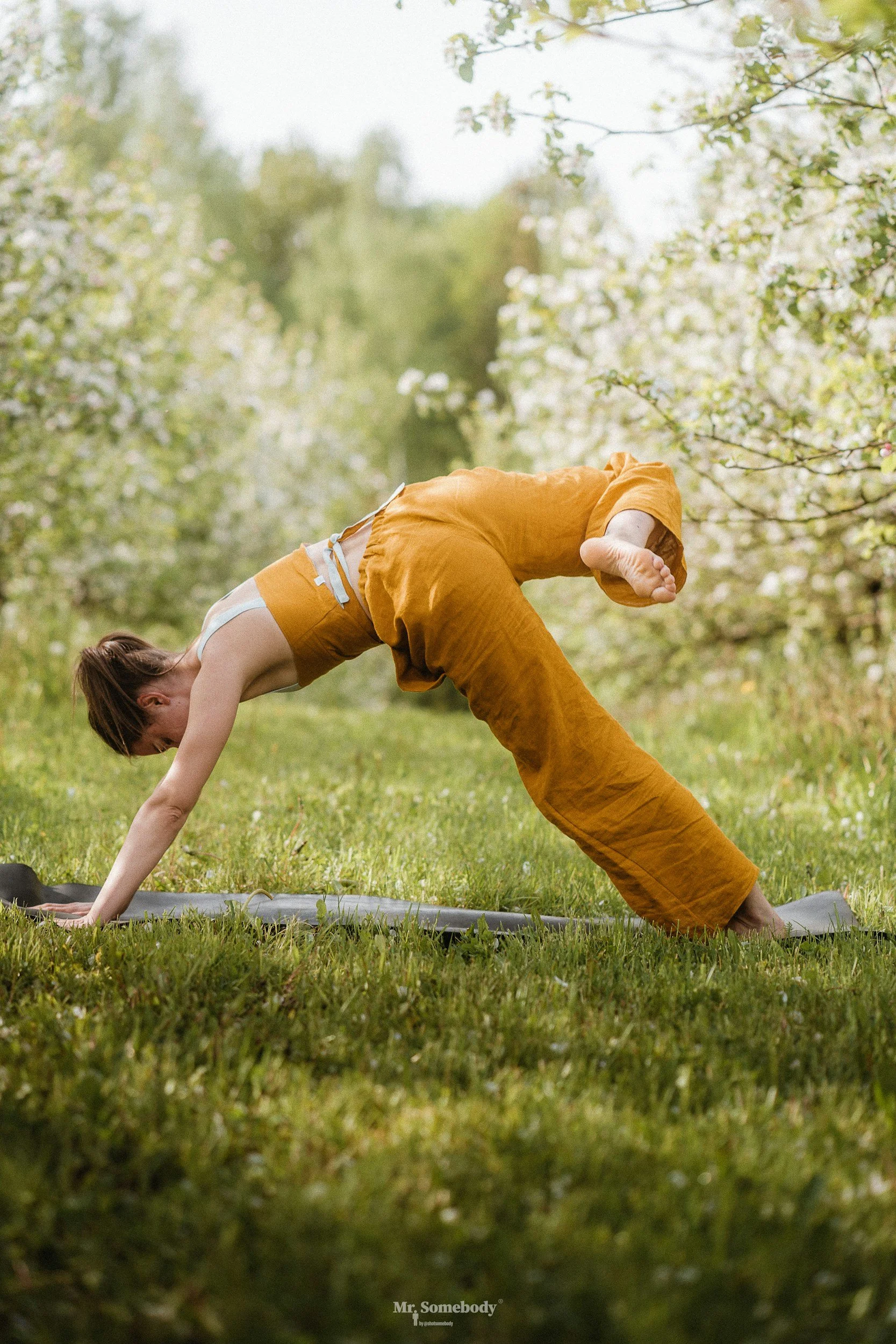
Ashtanga Led Primary Series (Members Only)
Ashtanga Yoga is a system of yoga established by T. Krishnamacharya (and popularized by K. Pattabhi Jois) designed to purify the body through breath and movement to bring stillness to the mind.
In a Led Primary Series class, students are led through the Primary Series in connection with their breath. Because we move with the breath and we move dynamically in the body, this is a physically challenging class.
Beginners to yoga or to the Ashtanga method are encouraged to practice several Mysore-style Ashtanga Yoga class before attending a Led Primary class.
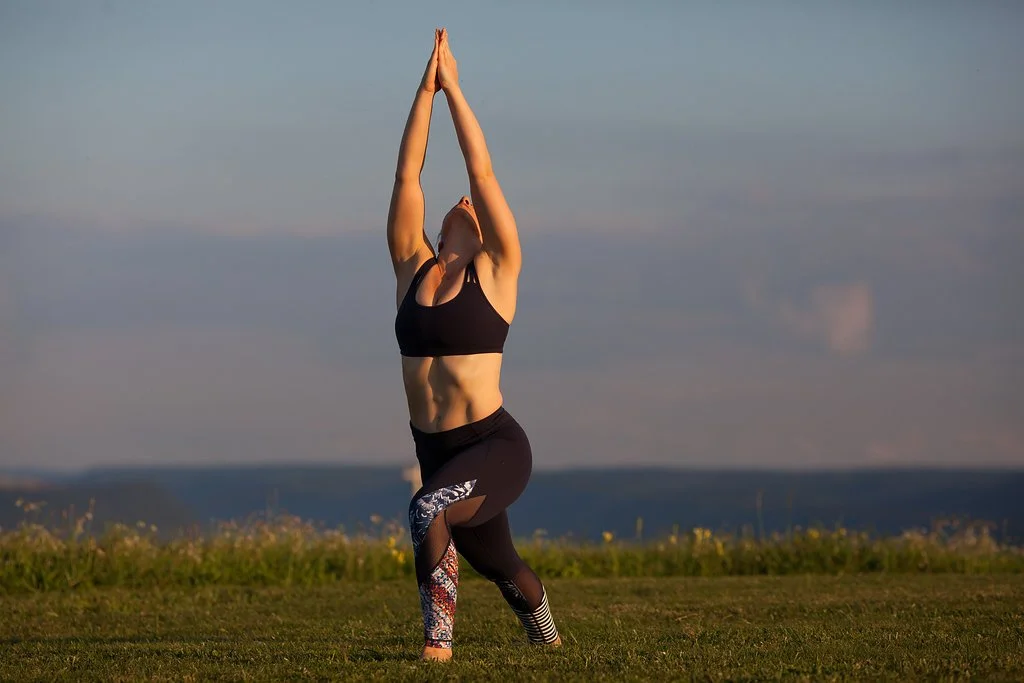
Somatic Saturdays
Do you remember what it is like to play? To make silly sounds and move your body in different ways just because it feels good?
That’s what Somatic Saturdays are for. Exploration of your body, of sound, and of movement, so you can emerge a little lighter and a little more like yourself.
Qigong 4 Well-Being (Members Only)
Qigong for Well-Being is a continued Qigong practice and learning for anyone who has completed an "Intro to Qigong" Course at Sattva. In these classes, we continue to practice the basics learned in the Intro class, and add in other movements, styles, meditations and healing sounds, all for the intention of enhancing our everyday lives, health and well-being.
You must purchase a monthly membership to attend these Qigong for Well-Being classes. If we need to cancel a class due to unforeseen circumstances, we will do our best to make up the class at another date/time.
Qigong 4 Well-Being (Members Only)
Qigong for Well-Being is a continued Qigong practice and learning for anyone who has completed an "Intro to Qigong" Course at Sattva. In these classes, we continue to practice the basics learned in the Intro class, and add in other movements, styles, meditations and healing sounds, all for the intention of enhancing our everyday lives, health and well-being.
You must purchase a monthly membership to attend these Qigong for Well-Being classes. If we need to cancel a class due to unforeseen circumstances, we will do our best to make up the class at another date/time.
Mysore (Members Only)
The traditional method of teaching Ashtanga yoga: 1-on-1 within a group setting. No prior yoga experience is necessary, only a commitment to grow and learn in the practice.
Students work independently on the particular series of postures that is most appropriate for them. The teacher assists, adjusts and may quietly discuss particular difficulties or concerns with individual students during class.
Mysore (Members Only)
The traditional method of teaching Ashtanga yoga: 1-on-1 within a group setting. No prior yoga experience is necessary, only a commitment to grow and learn in the practice.
Students work independently on the particular series of postures that is most appropriate for them. The teacher assists, adjusts and may quietly discuss particular difficulties or concerns with individual students during class.
Mysore for Beginners
Ashtanga Yoga is traditionally taught in a Mysore setting, named after a city in India (Mysuru) where it was taught by K. Pattabhi Jois. As a new student, you will be taught how to breathe and how to move, and you will learn a small portion of the postures you see other students in the room practicing.
Ashtanga Yoga is a practice that is approachable and healing for all bodies, all levels, and all sizes. Whether you are new to yoga, new to Ashtanga Yoga, or just want to try something new, you are welcome.
Mysore (Members Only)
The traditional method of teaching Ashtanga yoga: 1-on-1 within a group setting. No prior yoga experience is necessary, only a commitment to grow and learn in the practice.
Students work independently on the particular series of postures that is most appropriate for them. The teacher assists, adjusts and may quietly discuss particular difficulties or concerns with individual students during class.
Yoga From the Inside Out
“Yoga from the Inside Out” is a guided journey of self-discovery through asana. Each class is a meditation in motion where participants are encouraged to listen to their bodies and foster their inner experience through the vehicle of the breath. Students have described their experience as a flower bud slowly unfolding its petals to the light.
The asanas are appropriate for every body, all people regardless of their flexibility, age, background or yoga experience. If you are a person who values time to breathe, enjoys mindful movement, and seeks to deepen the mind-body-spirit connection, then “Yoga from the Inside Out” will be a wonderful hour in your week.
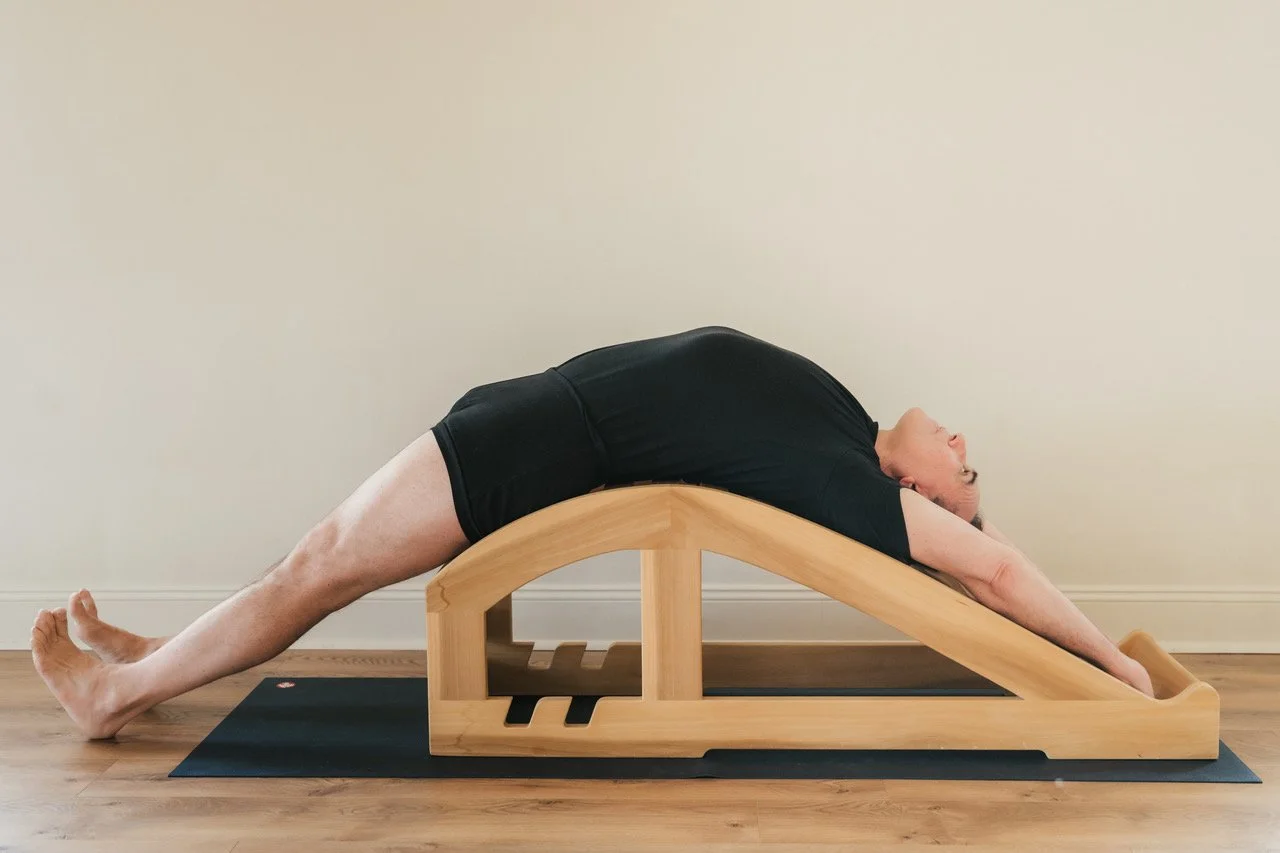
Restorative Iyengar with Pranayama
Restorative practices have been a part of the Iyengar method from the very start. In fact, any restorative style of yoga can be traced back to B.K.S. Iyengar’s format of introducing props, in what we now generally refer to as restorative poses, to find stability and comfort.
In the Iyengar method, a restorative practice uses the props (bolsters, blankets, chairs) not only to remove effort, but to direct awareness, deepen alignment, and allow the body and mind to truly settle. In these moments of supported stillness, we cultivate a presence of mind that allows for the deeper essence of yoga to arise within oneself.
Restorative yoga and pranayama go together. As the body releases tension, directed breath work draws the attention inward and calms the nervous system, creating a mindful sense of well-being.
Join me in this weekly class and give your nervous system the ‘massage’ it needs!
Yoga From the Inside Out
“Yoga from the Inside Out” is a guided journey of self-discovery through asana. Each class is a meditation in motion where participants are encouraged to listen to their bodies and foster their inner experience through the vehicle of the breath. Students have described their experience as a flower bud slowly unfolding its petals to the light.
The asanas are appropriate for every body, all people regardless of their flexibility, age, background or yoga experience. If you are a person who values time to breathe, enjoys mindful movement, and seeks to deepen the mind-body-spirit connection, then “Yoga from the Inside Out” will be a wonderful hour in your week.
Restorative Iyengar with Pranayama
Restorative practices have been a part of the Iyengar method from the very start. In fact, any restorative style of yoga can be traced back to B.K.S. Iyengar’s format of introducing props, in what we now generally refer to as restorative poses, to find stability and comfort.
In the Iyengar method, a restorative practice uses the props (bolsters, blankets, chairs) not only to remove effort, but to direct awareness, deepen alignment, and allow the body and mind to truly settle. In these moments of supported stillness, we cultivate a presence of mind that allows for the deeper essence of yoga to arise within oneself.
Restorative yoga and pranayama go together. As the body releases tension, directed breath work draws the attention inward and calms the nervous system, creating a mindful sense of well-being.
Join me in this weekly class and give your nervous system the ‘massage’ it needs!
Yoga From the Inside Out
“Yoga from the Inside Out” is a guided journey of self-discovery through asana. Each class is a meditation in motion where participants are encouraged to listen to their bodies and foster their inner experience through the vehicle of the breath. Students have described their experience as a flower bud slowly unfolding its petals to the light.
The asanas are appropriate for every body, all people regardless of their flexibility, age, background or yoga experience. If you are a person who values time to breathe, enjoys mindful movement, and seeks to deepen the mind-body-spirit connection, then “Yoga from the Inside Out” will be a wonderful hour in your week.
Restorative Iyengar with Pranayama
Restorative practices have been a part of the Iyengar method from the very start. In fact, any restorative style of yoga can be traced back to B.K.S. Iyengar’s format of introducing props, in what we now generally refer to as restorative poses, to find stability and comfort.
In the Iyengar method, a restorative practice uses the props (bolsters, blankets, chairs) not only to remove effort, but to direct awareness, deepen alignment, and allow the body and mind to truly settle. In these moments of supported stillness, we cultivate a presence of mind that allows for the deeper essence of yoga to arise within oneself.
Restorative yoga and pranayama go together. As the body releases tension, directed breath work draws the attention inward and calms the nervous system, creating a mindful sense of well-being.
Join me in this weekly class and give your nervous system the ‘massage’ it needs!
Yoga From the Inside Out
“Yoga from the Inside Out” is a guided journey of self-discovery through asana. Each class is a meditation in motion where participants are encouraged to listen to their bodies and foster their inner experience through the vehicle of the breath. Students have described their experience as a flower bud slowly unfolding its petals to the light.
The asanas are appropriate for every body, all people regardless of their flexibility, age, background or yoga experience. If you are a person who values time to breathe, enjoys mindful movement, and seeks to deepen the mind-body-spirit connection, then “Yoga from the Inside Out” will be a wonderful hour in your week.
Restorative Iyengar with Pranayama
Restorative practices have been a part of the Iyengar method from the very start. In fact, any restorative style of yoga can be traced back to B.K.S. Iyengar’s format of introducing props, in what we now generally refer to as restorative poses, to find stability and comfort.
In the Iyengar method, a restorative practice uses the props (bolsters, blankets, chairs) not only to remove effort, but to direct awareness, deepen alignment, and allow the body and mind to truly settle. In these moments of supported stillness, we cultivate a presence of mind that allows for the deeper essence of yoga to arise within oneself.
Restorative yoga and pranayama go together. As the body releases tension, directed breath work draws the attention inward and calms the nervous system, creating a mindful sense of well-being.
Join me in this weekly class and give your nervous system the ‘massage’ it needs!
Yoga From the Inside Out
“Yoga from the Inside Out” is a guided journey of self-discovery through asana. Each class is a meditation in motion where participants are encouraged to listen to their bodies and foster their inner experience through the vehicle of the breath. Students have described their experience as a flower bud slowly unfolding its petals to the light.
The asanas are appropriate for every body, all people regardless of their flexibility, age, background or yoga experience. If you are a person who values time to breathe, enjoys mindful movement, and seeks to deepen the mind-body-spirit connection, then “Yoga from the Inside Out” will be a wonderful hour in your week.
Restorative Iyengar with Pranayama
Restorative practices have been a part of the Iyengar method from the very start. In fact, any restorative style of yoga can be traced back to B.K.S. Iyengar’s format of introducing props, in what we now generally refer to as restorative poses, to find stability and comfort.
In the Iyengar method, a restorative practice uses the props (bolsters, blankets, chairs) not only to remove effort, but to direct awareness, deepen alignment, and allow the body and mind to truly settle. In these moments of supported stillness, we cultivate a presence of mind that allows for the deeper essence of yoga to arise within oneself.
Restorative yoga and pranayama go together. As the body releases tension, directed breath work draws the attention inward and calms the nervous system, creating a mindful sense of well-being.
Join me in this weekly class and give your nervous system the ‘massage’ it needs!
Yoga From the Inside Out
“Yoga from the Inside Out” is a guided journey of self-discovery through asana. Each class is a meditation in motion where participants are encouraged to listen to their bodies and foster their inner experience through the vehicle of the breath. Students have described their experience as a flower bud slowly unfolding its petals to the light.
The asanas are appropriate for every body, all people regardless of their flexibility, age, background or yoga experience. If you are a person who values time to breathe, enjoys mindful movement, and seeks to deepen the mind-body-spirit connection, then “Yoga from the Inside Out” will be a wonderful hour in your week.
Restorative Iyengar with Pranayama
Restorative practices have been a part of the Iyengar method from the very start. In fact, any restorative style of yoga can be traced back to B.K.S. Iyengar’s format of introducing props, in what we now generally refer to as restorative poses, to find stability and comfort.
In the Iyengar method, a restorative practice uses the props (bolsters, blankets, chairs) not only to remove effort, but to direct awareness, deepen alignment, and allow the body and mind to truly settle. In these moments of supported stillness, we cultivate a presence of mind that allows for the deeper essence of yoga to arise within oneself.
Restorative yoga and pranayama go together. As the body releases tension, directed breath work draws the attention inward and calms the nervous system, creating a mindful sense of well-being.
Join me in this weekly class and give your nervous system the ‘massage’ it needs!
Yoga From the Inside Out
“Yoga from the Inside Out” is a guided journey of self-discovery through asana. Each class is a meditation in motion where participants are encouraged to listen to their bodies and foster their inner experience through the vehicle of the breath. Students have described their experience as a flower bud slowly unfolding its petals to the light.
The asanas are appropriate for every body, all people regardless of their flexibility, age, background or yoga experience. If you are a person who values time to breathe, enjoys mindful movement, and seeks to deepen the mind-body-spirit connection, then “Yoga from the Inside Out” will be a wonderful hour in your week.
Restorative Iyengar with Pranayama
Restorative practices have been a part of the Iyengar method from the very start. In fact, any restorative style of yoga can be traced back to B.K.S. Iyengar’s format of introducing props, in what we now generally refer to as restorative poses, to find stability and comfort.
In the Iyengar method, a restorative practice uses the props (bolsters, blankets, chairs) not only to remove effort, but to direct awareness, deepen alignment, and allow the body and mind to truly settle. In these moments of supported stillness, we cultivate a presence of mind that allows for the deeper essence of yoga to arise within oneself.
Restorative yoga and pranayama go together. As the body releases tension, directed breath work draws the attention inward and calms the nervous system, creating a mindful sense of well-being.
Join me in this weekly class and give your nervous system the ‘massage’ it needs!
Yoga From the Inside Out
“Yoga from the Inside Out” is a guided journey of self-discovery through asana. Each class is a meditation in motion where participants are encouraged to listen to their bodies and foster their inner experience through the vehicle of the breath. Students have described their experience as a flower bud slowly unfolding its petals to the light.
The asanas are appropriate for every body, all people regardless of their flexibility, age, background or yoga experience. If you are a person who values time to breathe, enjoys mindful movement, and seeks to deepen the mind-body-spirit connection, then “Yoga from the Inside Out” will be a wonderful hour in your week.
Restorative Iyengar with Pranayama
Restorative practices have been a part of the Iyengar method from the very start. In fact, any restorative style of yoga can be traced back to B.K.S. Iyengar’s format of introducing props, in what we now generally refer to as restorative poses, to find stability and comfort.
In the Iyengar method, a restorative practice uses the props (bolsters, blankets, chairs) not only to remove effort, but to direct awareness, deepen alignment, and allow the body and mind to truly settle. In these moments of supported stillness, we cultivate a presence of mind that allows for the deeper essence of yoga to arise within oneself.
Restorative yoga and pranayama go together. As the body releases tension, directed breath work draws the attention inward and calms the nervous system, creating a mindful sense of well-being.
Join me in this weekly class and give your nervous system the ‘massage’ it needs!
Restorative Iyengar with Pranayama
Restorative practices have been a part of the Iyengar method from the very start. In fact, any restorative style of yoga can be traced back to B.K.S. Iyengar’s format of introducing props, in what we now generally refer to as restorative poses, to find stability and comfort.
In the Iyengar method, a restorative practice uses the props (bolsters, blankets, chairs) not only to remove effort, but to direct awareness, deepen alignment, and allow the body and mind to truly settle. In these moments of supported stillness, we cultivate a presence of mind that allows for the deeper essence of yoga to arise within oneself.
Restorative yoga and pranayama go together. As the body releases tension, directed breath work draws the attention inward and calms the nervous system, creating a mindful sense of well-being.
Join me in this weekly class and give your nervous system the ‘massage’ it needs!
Restorative Iyengar with Pranayama
Restorative practices have been a part of the Iyengar method from the very start. In fact, any restorative style of yoga can be traced back to B.K.S. Iyengar’s format of introducing props, in what we now generally refer to as restorative poses, to find stability and comfort.
In the Iyengar method, a restorative practice uses the props (bolsters, blankets, chairs) not only to remove effort, but to direct awareness, deepen alignment, and allow the body and mind to truly settle. In these moments of supported stillness, we cultivate a presence of mind that allows for the deeper essence of yoga to arise within oneself.
Restorative yoga and pranayama go together. As the body releases tension, directed breath work draws the attention inward and calms the nervous system, creating a mindful sense of well-being.
Join me in this weekly class and give your nervous system the ‘massage’ it needs!
Restorative Iyengar with Pranayama
Restorative practices have been a part of the Iyengar method from the very start. In fact, any restorative style of yoga can be traced back to B.K.S. Iyengar’s format of introducing props, in what we now generally refer to as restorative poses, to find stability and comfort.
In the Iyengar method, a restorative practice uses the props (bolsters, blankets, chairs) not only to remove effort, but to direct awareness, deepen alignment, and allow the body and mind to truly settle. In these moments of supported stillness, we cultivate a presence of mind that allows for the deeper essence of yoga to arise within oneself.
Restorative yoga and pranayama go together. As the body releases tension, directed breath work draws the attention inward and calms the nervous system, creating a mindful sense of well-being.
Join me in this weekly class and give your nervous system the ‘massage’ it needs!
Restorative Iyengar with Pranayama
Restorative practices have been a part of the Iyengar method from the very start. In fact, any restorative style of yoga can be traced back to B.K.S. Iyengar’s format of introducing props, in what we now generally refer to as restorative poses, to find stability and comfort.
In the Iyengar method, a restorative practice uses the props (bolsters, blankets, chairs) not only to remove effort, but to direct awareness, deepen alignment, and allow the body and mind to truly settle. In these moments of supported stillness, we cultivate a presence of mind that allows for the deeper essence of yoga to arise within oneself.
Restorative yoga and pranayama go together. As the body releases tension, directed breath work draws the attention inward and calms the nervous system, creating a mindful sense of well-being.
Join me in this weekly class and give your nervous system the ‘massage’ it needs!
Restorative Iyengar with Pranayama
Restorative practices have been a part of the Iyengar method from the very start. In fact, any restorative style of yoga can be traced back to B.K.S. Iyengar’s format of introducing props, in what we now generally refer to as restorative poses, to find stability and comfort.
In the Iyengar method, a restorative practice uses the props (bolsters, blankets, chairs) not only to remove effort, but to direct awareness, deepen alignment, and allow the body and mind to truly settle. In these moments of supported stillness, we cultivate a presence of mind that allows for the deeper essence of yoga to arise within oneself.
Restorative yoga and pranayama go together. As the body releases tension, directed breath work draws the attention inward and calms the nervous system, creating a mindful sense of well-being.
Join me in this weekly class and give your nervous system the ‘massage’ it needs!
Restorative Iyengar with Pranayama
Restorative practices have been a part of the Iyengar method from the very start. In fact, any restorative style of yoga can be traced back to B.K.S. Iyengar’s format of introducing props, in what we now generally refer to as restorative poses, to find stability and comfort.
In the Iyengar method, a restorative practice uses the props (bolsters, blankets, chairs) not only to remove effort, but to direct awareness, deepen alignment, and allow the body and mind to truly settle. In these moments of supported stillness, we cultivate a presence of mind that allows for the deeper essence of yoga to arise within oneself.
Restorative yoga and pranayama go together. As the body releases tension, directed breath work draws the attention inward and calms the nervous system, creating a mindful sense of well-being.
Join me in this weekly class and give your nervous system the ‘massage’ it needs!
Restorative Iyengar with Pranayama
Restorative practices have been a part of the Iyengar method from the very start. In fact, any restorative style of yoga can be traced back to B.K.S. Iyengar’s format of introducing props, in what we now generally refer to as restorative poses, to find stability and comfort.
In the Iyengar method, a restorative practice uses the props (bolsters, blankets, chairs) not only to remove effort, but to direct awareness, deepen alignment, and allow the body and mind to truly settle. In these moments of supported stillness, we cultivate a presence of mind that allows for the deeper essence of yoga to arise within oneself.
Restorative yoga and pranayama go together. As the body releases tension, directed breath work draws the attention inward and calms the nervous system, creating a mindful sense of well-being.
Join me in this weekly class and give your nervous system the ‘massage’ it needs!
Mysore for Beginners
Ashtanga Yoga is traditionally taught in a Mysore setting, named after a city in India (Mysuru) where it was taught by K. Pattabhi Jois. As a new student, you will be taught how to breathe and how to move, and you will learn a small portion of the postures you see other students in the room practicing.
Ashtanga Yoga is a practice that is approachable and healing for all bodies, all levels, and all sizes. Whether you are new to yoga, new to Ashtanga Yoga, or just want to try something new, you are welcome.
Mysore (Members Only)
The traditional method of teaching Ashtanga yoga: 1-on-1 within a group setting. No prior yoga experience is necessary, only a commitment to grow and learn in the practice.
Students work independently on the particular series of postures that is most appropriate for them. The teacher assists, adjusts and may quietly discuss particular difficulties or concerns with individual students during class.
Qigong 4 Well-Being (Members Only)
Qigong for Well-Being is a continued Qigong practice and learning for anyone who has completed an "Intro to Qigong" Course at Sattva. In these classes, we continue to practice the basics learned in the Intro class, and add in other movements, styles, meditations and healing sounds, all for the intention of enhancing our everyday lives, health and well-being.
You must purchase a monthly membership to attend these Qigong for Well-Being classes. If we need to cancel a class due to unforeseen circumstances, we will do our best to make up the class at another date/time.
Qigong 4 Well-Being (Members Only)
Qigong for Well-Being is a continued Qigong practice and learning for anyone who has completed an "Intro to Qigong" Course at Sattva. In these classes, we continue to practice the basics learned in the Intro class, and add in other movements, styles, meditations and healing sounds, all for the intention of enhancing our everyday lives, health and well-being.
You must purchase a monthly membership to attend these Qigong for Well-Being classes. If we need to cancel a class due to unforeseen circumstances, we will do our best to make up the class at another date/time.
Mysore (Members Only)
The traditional method of teaching Ashtanga yoga: 1-on-1 within a group setting. No prior yoga experience is necessary, only a commitment to grow and learn in the practice.
Students work independently on the particular series of postures that is most appropriate for them. The teacher assists, adjusts and may quietly discuss particular difficulties or concerns with individual students during class.
Mysore for Beginners
Ashtanga Yoga is traditionally taught in a Mysore setting, named after a city in India (Mysuru) where it was taught by K. Pattabhi Jois. As a new student, you will be taught how to breathe and how to move, and you will learn a small portion of the postures you see other students in the room practicing.
Ashtanga Yoga is a practice that is approachable and healing for all bodies, all levels, and all sizes. Whether you are new to yoga, new to Ashtanga Yoga, or just want to try something new, you are welcome.
Mysore (Members Only)
The traditional method of teaching Ashtanga yoga: 1-on-1 within a group setting. No prior yoga experience is necessary, only a commitment to grow and learn in the practice.
Students work independently on the particular series of postures that is most appropriate for them. The teacher assists, adjusts and may quietly discuss particular difficulties or concerns with individual students during class.
Mysore (Members Only)
The traditional method of teaching Ashtanga yoga: 1-on-1 within a group setting. No prior yoga experience is necessary, only a commitment to grow and learn in the practice.
Students work independently on the particular series of postures that is most appropriate for them. The teacher assists, adjusts and may quietly discuss particular difficulties or concerns with individual students during class.
Mysore (Members Only)
The traditional method of teaching Ashtanga yoga: 1-on-1 within a group setting. No prior yoga experience is necessary, only a commitment to grow and learn in the practice.
Students work independently on the particular series of postures that is most appropriate for them. The teacher assists, adjusts and may quietly discuss particular difficulties or concerns with individual students during class.
Mysore for Beginners
Ashtanga Yoga is traditionally taught in a Mysore setting, named after a city in India (Mysuru) where it was taught by K. Pattabhi Jois. As a new student, you will be taught how to breathe and how to move, and you will learn a small portion of the postures you see other students in the room practicing.
Ashtanga Yoga is a practice that is approachable and healing for all bodies, all levels, and all sizes. Whether you are new to yoga, new to Ashtanga Yoga, or just want to try something new, you are welcome.
Mysore (Members Only)
The traditional method of teaching Ashtanga yoga: 1-on-1 within a group setting. No prior yoga experience is necessary, only a commitment to grow and learn in the practice.
Students work independently on the particular series of postures that is most appropriate for them. The teacher assists, adjusts and may quietly discuss particular difficulties or concerns with individual students during class.
Qigong 4 Well-Being (Members Only)
Qigong for Well-Being is a continued Qigong practice and learning for anyone who has completed an "Intro to Qigong" Course at Sattva. In these classes, we continue to practice the basics learned in the Intro class, and add in other movements, styles, meditations and healing sounds, all for the intention of enhancing our everyday lives, health and well-being.
You must purchase a monthly membership to attend these Qigong for Well-Being classes. If we need to cancel a class due to unforeseen circumstances, we will do our best to make up the class at another date/time.
Qigong 4 Well-Being (Members Only)
Qigong for Well-Being is a continued Qigong practice and learning for anyone who has completed an "Intro to Qigong" Course at Sattva. In these classes, we continue to practice the basics learned in the Intro class, and add in other movements, styles, meditations and healing sounds, all for the intention of enhancing our everyday lives, health and well-being.
You must purchase a monthly membership to attend these Qigong for Well-Being classes. If we need to cancel a class due to unforeseen circumstances, we will do our best to make up the class at another date/time.
Ashtanga Led Primary Series (Members Only)
Ashtanga Yoga is a system of yoga established by T. Krishnamacharya (and popularized by K. Pattabhi Jois) designed to purify the body through breath and movement to bring stillness to the mind.
In a Led Primary Series class, students are led through the Primary Series in connection with their breath. Because we move with the breath and we move dynamically in the body, this is a physically challenging class.
Beginners to yoga or to the Ashtanga method are encouraged to practice several Mysore-style Ashtanga Yoga class before attending a Led Primary class.
Mysore (Members Only)
The traditional method of teaching Ashtanga yoga: 1-on-1 within a group setting. No prior yoga experience is necessary, only a commitment to grow and learn in the practice.
Students work independently on the particular series of postures that is most appropriate for them. The teacher assists, adjusts and may quietly discuss particular difficulties or concerns with individual students during class.
Qigong 4 Well-Being (Members Only)
Qigong for Well-Being is a continued Qigong practice and learning for anyone who has completed an "Intro to Qigong" Course at Sattva. In these classes, we continue to practice the basics learned in the Intro class, and add in other movements, styles, meditations and healing sounds, all for the intention of enhancing our everyday lives, health and well-being.
You must purchase a monthly membership to attend these Qigong for Well-Being classes. If we need to cancel a class due to unforeseen circumstances, we will do our best to make up the class at another date/time.
Mysore for Beginners
Ashtanga Yoga is traditionally taught in a Mysore setting, named after a city in India (Mysuru) where it was taught by K. Pattabhi Jois. As a new student, you will be taught how to breathe and how to move, and you will learn a small portion of the postures you see other students in the room practicing.
Ashtanga Yoga is a practice that is approachable and healing for all bodies, all levels, and all sizes. Whether you are new to yoga, new to Ashtanga Yoga, or just want to try something new, you are welcome.
Mysore (Members Only)
The traditional method of teaching Ashtanga yoga: 1-on-1 within a group setting. No prior yoga experience is necessary, only a commitment to grow and learn in the practice.
Students work independently on the particular series of postures that is most appropriate for them. The teacher assists, adjusts and may quietly discuss particular difficulties or concerns with individual students during class.
Mysore (Members Only)
The traditional method of teaching Ashtanga yoga: 1-on-1 within a group setting. No prior yoga experience is necessary, only a commitment to grow and learn in the practice.
Students work independently on the particular series of postures that is most appropriate for them. The teacher assists, adjusts and may quietly discuss particular difficulties or concerns with individual students during class.
Mysore for Beginners
Ashtanga Yoga is traditionally taught in a Mysore setting, named after a city in India (Mysuru) where it was taught by K. Pattabhi Jois. As a new student, you will be taught how to breathe and how to move, and you will learn a small portion of the postures you see other students in the room practicing.
Ashtanga Yoga is a practice that is approachable and healing for all bodies, all levels, and all sizes. Whether you are new to yoga, new to Ashtanga Yoga, or just want to try something new, you are welcome.
Mysore (Members Only)
The traditional method of teaching Ashtanga yoga: 1-on-1 within a group setting. No prior yoga experience is necessary, only a commitment to grow and learn in the practice.
Students work independently on the particular series of postures that is most appropriate for them. The teacher assists, adjusts and may quietly discuss particular difficulties or concerns with individual students during class.
Qigong 4 Well-Being (Members Only)
Qigong for Well-Being is a continued Qigong practice and learning for anyone who has completed an "Intro to Qigong" Course at Sattva. In these classes, we continue to practice the basics learned in the Intro class, and add in other movements, styles, meditations and healing sounds, all for the intention of enhancing our everyday lives, health and well-being.
You must purchase a monthly membership to attend these Qigong for Well-Being classes. If we need to cancel a class due to unforeseen circumstances, we will do our best to make up the class at another date/time.
Qigong 4 Well-Being (Members Only)
Qigong for Well-Being is a continued Qigong practice and learning for anyone who has completed an "Intro to Qigong" Course at Sattva. In these classes, we continue to practice the basics learned in the Intro class, and add in other movements, styles, meditations and healing sounds, all for the intention of enhancing our everyday lives, health and well-being.
You must purchase a monthly membership to attend these Qigong for Well-Being classes. If we need to cancel a class due to unforeseen circumstances, we will do our best to make up the class at another date/time.
Ashtanga Led Primary Series (Members Only)
Ashtanga Yoga is a system of yoga established by T. Krishnamacharya (and popularized by K. Pattabhi Jois) designed to purify the body through breath and movement to bring stillness to the mind.
In a Led Primary Series class, students are led through the Primary Series in connection with their breath. Because we move with the breath and we move dynamically in the body, this is a physically challenging class.
Beginners to yoga or to the Ashtanga method are encouraged to practice several Mysore-style Ashtanga Yoga class before attending a Led Primary class.
Mysore (Members Only)
The traditional method of teaching Ashtanga yoga: 1-on-1 within a group setting. No prior yoga experience is necessary, only a commitment to grow and learn in the practice.
Students work independently on the particular series of postures that is most appropriate for them. The teacher assists, adjusts and may quietly discuss particular difficulties or concerns with individual students during class.
Mysore (Members Only)
The traditional method of teaching Ashtanga yoga: 1-on-1 within a group setting. No prior yoga experience is necessary, only a commitment to grow and learn in the practice.
Students work independently on the particular series of postures that is most appropriate for them. The teacher assists, adjusts and may quietly discuss particular difficulties or concerns with individual students during class.
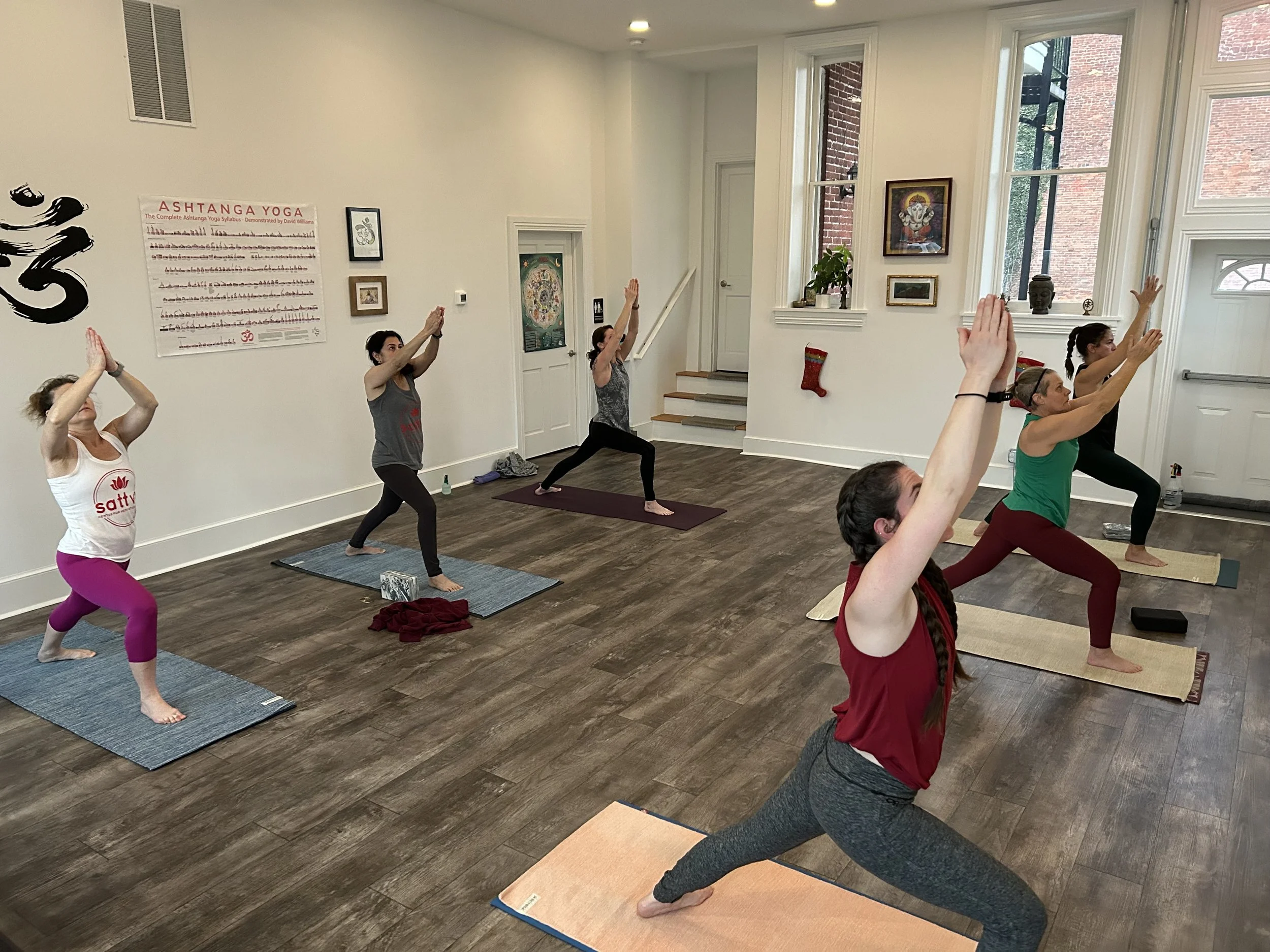
Mysore (Members Only)
The traditional method of teaching Ashtanga yoga: 1-on-1 within a group setting. No prior yoga experience is necessary, only a commitment to grow and learn in the practice.
Students work independently on the particular series of postures that is most appropriate for them. The teacher assists, adjusts and may quietly discuss particular difficulties or concerns with individual students during class.
Qigong 4 Well-Being (Members Only)
Qigong for Well-Being is a continued Qigong practice and learning for anyone who has completed an "Intro to Qigong" Course at Sattva. In these classes, we continue to practice the basics learned in the Intro class, and add in other movements, styles, meditations and healing sounds, all for the intention of enhancing our everyday lives, health and well-being.
You must purchase a monthly membership to attend these Qigong for Well-Being classes. If we need to cancel a class due to unforeseen circumstances, we will do our best to make up the class at another date/time.
Qigong 4 Well-Being (Members Only)
Qigong for Well-Being is a continued Qigong practice and learning for anyone who has completed an "Intro to Qigong" Course at Sattva. In these classes, we continue to practice the basics learned in the Intro class, and add in other movements, styles, meditations and healing sounds, all for the intention of enhancing our everyday lives, health and well-being.
You must purchase a monthly membership to attend these Qigong for Well-Being classes. If we need to cancel a class due to unforeseen circumstances, we will do our best to make up the class at another date/time.
Ashtanga Led Primary Series (Members Only)
Ashtanga Yoga is a system of yoga established by T. Krishnamacharya (and popularized by K. Pattabhi Jois) designed to purify the body through breath and movement to bring stillness to the mind.
In a Led Primary Series class, students are led through the Primary Series in connection with their breath. Because we move with the breath and we move dynamically in the body, this is a physically challenging class.
Beginners to yoga or to the Ashtanga method are encouraged to practice several Mysore-style Ashtanga Yoga class before attending a Led Primary class.